
It’s a question that surprises most people. If you’ve ever had a chip stolen on the seafront, been woken at 4am by screaming on your roof, or watched a herring gull tear open a bin bag in a supermarket car park, the idea that seagulls might be endangered sounds absurd. They seem to be everywhere, and getting bolder by the year.

But the reality is more complicated than it looks from a town centre pavement. Several UK gull species are in serious trouble, and the herring gull, the big grey-and-white bird most people picture when they hear the word “seagull”, has seen its population fall by more than 60% since the 1980s. It’s now on the UK Red List of Birds of Conservation Concern.
So how can a bird that seems to be thriving in our towns be classified alongside some of the UK’s most threatened species? And what does that mean if gulls are nesting on your property and causing problems? Here’s what’s actually going on.
Why there’s no such thing as a “seagull” – By expert Liverpool bird controllers
Before we go any further, it’s worth clearing up a common misunderstanding. “Seagull” isn’t a scientific term, and it doesn’t refer to a single species.
There are around 50 gull species worldwide, and seven of them breed regularly in the UK.
Each has its own population trends, habitat preferences, and conservation status, which is why a blanket answer to “are seagulls endangered?” doesn’t quite work.
The species you’re most likely to encounter in towns and cities is the herring gull (Larus argentatus), a large gull with a grey back, white underparts, and a distinctive red spot on its yellow bill. But depending on where you are in the country, you might also see lesser black-backed gulls, great black-backed gulls, black-headed gulls, common gulls, or kittiwakes.
All of them are now classified as either red or amber on the UK conservation list, which means every breeding gull species in Britain is considered at risk to some degree.
Which gull species are declining?
Here’s how the UK’s main gull species are faring, based on the most recent Birds of Conservation Concern assessment and data from the British Trust for Ornithology (BTO).
Herring gull (Red List)
The herring gull’s breeding population has fallen by roughly 72% over the past 55 years, and England alone has lost more than 20% of its herring gulls in the three generations since 2000. This is the species that’s increased most visibly in urban areas, which creates a misleading impression of abundance.
In reality, the growth in urban colonies hasn’t come close to offsetting the collapse of coastal breeding populations.
Surveys have found that more herring gulls now nest on rooftops in towns than at their traditional coastal nesting sites, which tells you how badly things have gone wrong at the coast.
Kittiwake (Red List)
Kittiwakes are smaller, more delicate-looking gulls that nest almost exclusively on cliff faces and coastal structures. Their decline has been dramatic, driven largely by the collapse of sand eel populations in the North Sea, which are their primary food source.
Kittiwakes rarely venture inland, so most people never see them, but their numbers have dropped sharply enough to place them firmly on the Red List.

Common gull (Red List)
Despite its name, the common gull has become rather less common.
Its numbers have decreased by around 53%, and it was moved from the Amber List to the Red List in the 2024 conservation assessment. Common gulls breed mainly in Scotland and northern England, nesting on moorland, loch islands, and increasingly on flat rooftops.
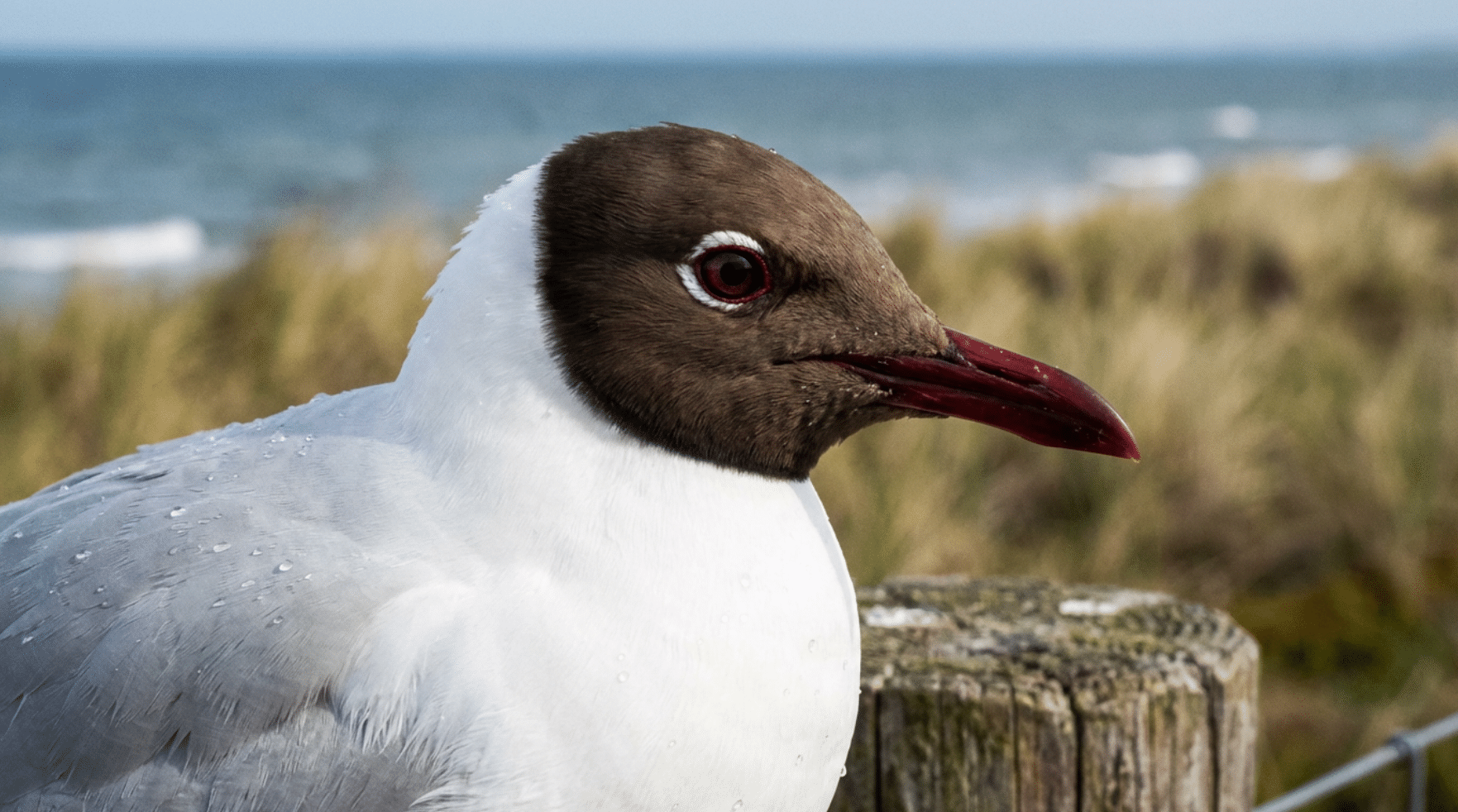
Black-headed gull (Amber List)
Black-headed gulls remain relatively numerous overall, but regional declines have been severe.
In Scotland, the breeding population has dropped by approximately 75%.
These are the smaller gulls you see in parks and playing fields during winter, the ones with a chocolate-brown head in summer that fades to a white head with dark ear patches in the colder months.
Lesser black-backed gull (Amber List)
Lesser black-backed gulls have declined by an estimated 48% and are amber-listed.
Like herring gulls, they’ve increasingly moved into urban areas, nesting on flat roofs in industrial estates and city centres.
Great black-backed gull (Amber List)
The largest gull in the world, the great black-backed gull has experienced a long-term moderate decline and sits on the Amber List.
It’s less common in urban areas than the herring gull but breeds around the UK coastline, particularly in Scotland and the south-west.
Why are gull populations falling?
Several factors have combined to push gull numbers down, and most of them are connected to changes in human activity rather than natural causes.
Less food at sea
Gulls have historically relied on fishing discards thrown overboard by trawlers, but stronger EU and UK regulations now require vessels to land more of their catch rather than dumping unwanted fish. That’s good news for fish stocks, but it’s removed a major food source that gulls depended on for decades.
At the same time, overfishing has depleted populations of sand eels and other small fish that gulls catch for themselves, hitting species like kittiwakes particularly hard.
Landfill closures
Open landfill sites were once a reliable feeding ground for herring gulls, lesser black-backed gulls, and other species.
As the UK has shifted towards enclosed waste processing and recycling, that food source has shrunk considerably. Gulls that once fed at landfill have moved into towns to scavenge from bins, fast food litter, and anything else they can find, which explains the growing urban presence even as overall numbers drop.
Avian influenza
Highly pathogenic avian influenza (HPAI), commonly known as bird flu, has swept through UK seabird colonies in recent years with devastating effect.
An estimated 7% of the UK’s breeding gull population has been lost to avian flu outbreaks, and the virus has hit some colonies harder than others. Kittiwake and great black-backed gull colonies have been particularly affected.
Habitat loss and disturbance
Coastal development, increased recreational use of beaches and cliffs, and predation by foxes and mink at ground-nesting sites have all contributed to the decline in traditional nesting habitat. Gulls need undisturbed sites to breed successfully, and as coastal areas become busier, fewer sites meet that requirement.
Climate change
Rising sea temperatures are shifting fish populations and affecting the marine food chain that gulls depend on.
Modelling suggests that under a 2°C warming scenario, the UK’s herring gull population could decline by a further 28% by 2050.
If gulls are declining, why do they seem to be everywhere?
This is the paradox that confuses almost everyone, including some politicians who’ve called for culls without understanding the data.
The short answer is that gulls have moved.
As conditions at the coast have worsened, herring gulls and lesser black-backed gulls in particular have shifted inland, nesting on flat rooftops, warehouse roofs, and residential properties in towns and cities.
Urban environments offer reliable food (bins, takeaways, outdoor dining), warmth from buildings, fewer predators than the coast, and flat rooftop surfaces that mimic the rocky ledges gulls nest on naturally. From the gull’s perspective, a town centre is a better bet than a deteriorating coastal colony. From the human perspective, it looks like an invasion.
But the urban population growth hasn’t compensated for the coastal collapse.
The total number of breeding gulls in the UK is significantly lower than it was 30 or 40 years ago, even though you might see more of them on your street than you used to. The birds haven’t multiplied. They’ve relocated.
What does this mean for property owners?
The conservation status of gulls has direct consequences for anyone dealing with them on their property. All wild birds in the UK are protected under the Wildlife and Countryside Act 1981, which makes it illegal to kill, injure, or capture any wild bird, or to take, damage, or destroy their eggs or active nests.
Gulls are no exception.
What has changed in recent years is the licensing framework.
General licences, which previously allowed authorised pest controllers to manage herring gulls and lesser black-backed gulls in certain situations without applying for individual permission, were revoked in England in 2019 and have been subject to tighter restrictions across Scotland, Wales, and Northern Ireland since then.
In practice, this means that if gulls are nesting on your roof, you cannot legally remove the nest, eggs, or chicks while the nest is active. You cannot block access to an active nest. And you cannot use lethal methods without a specific licence, which is increasingly difficult to obtain given the species’ conservation status.
What you can do about nesting gulls
The legal restrictions don’t mean you have to accept gull damage and disturbance indefinitely. They do mean that timing and method matter.
Outside the nesting season (October to February is the safest window)
You can install physical deterrents that prevent gulls from returning to the same nesting site the following year. Bird netting, post-and-wire systems, and anti-perching spikes are all effective when properly installed. For flat-roofed commercial buildings, where urban gulls most commonly nest, netting across the entire roof area is often the most reliable long-term solution.
Habitat modification
This is the solution we promote first and foremost as it discourages nesting in the first place.
Removing food sources, securing commercial waste bins, and reducing access to flat rooftop areas all make a property less attractive to prospecting gulls.
If you run a food business with outdoor waste storage, keeping bin areas clean and lids secured reduces the food reward that draws gulls to the area.
Falconry services
Trained hawks can be flown regularly over a site, they are very effective at discouraging gulls from settling on large commercial properties. It works best as a preventative measure before nesting is established.
Why professional advice matters
The licensing landscape around gull management has become significantly more complex in recent years, and the penalties for getting it wrong are serious. An unlimited fine, up to six months’ imprisonment, and reputational damage for businesses are all possible outcomes of illegal interference with protected birds.
Trust the experts at Liverpool Pest Control Co.
As a BPCA-accredited bird control company, we can assess your site, identify the species involved, advise on what’s legally permissible, and install proofing measures that prevent gulls from nesting without breaking the law. Where a licence application is needed, our experienced pest controller can help prepare the case and demonstrate that non-lethal alternatives have been considered.
We regularly deal with gull and pigeon problems on commercial and residential properties across the UK, and we understand both the conservation context and the practical reality of living alongside these birds. If gulls are causing problems on your property, we can help you find a legal, effective, and lasting solution.
Call us on 0800 027 2555 for a free survey, or fill in our online enquiry form.