
If you’ve got pigeons roosting on your roof, gulls nesting on your warehouse, or starlings getting into your loading bay, you’ve probably been told you need “bird control.”
But what does bird control actually mean?
Bird control is a broad term that covers any measure designed to deter, exclude, or manage pest birds on a property.
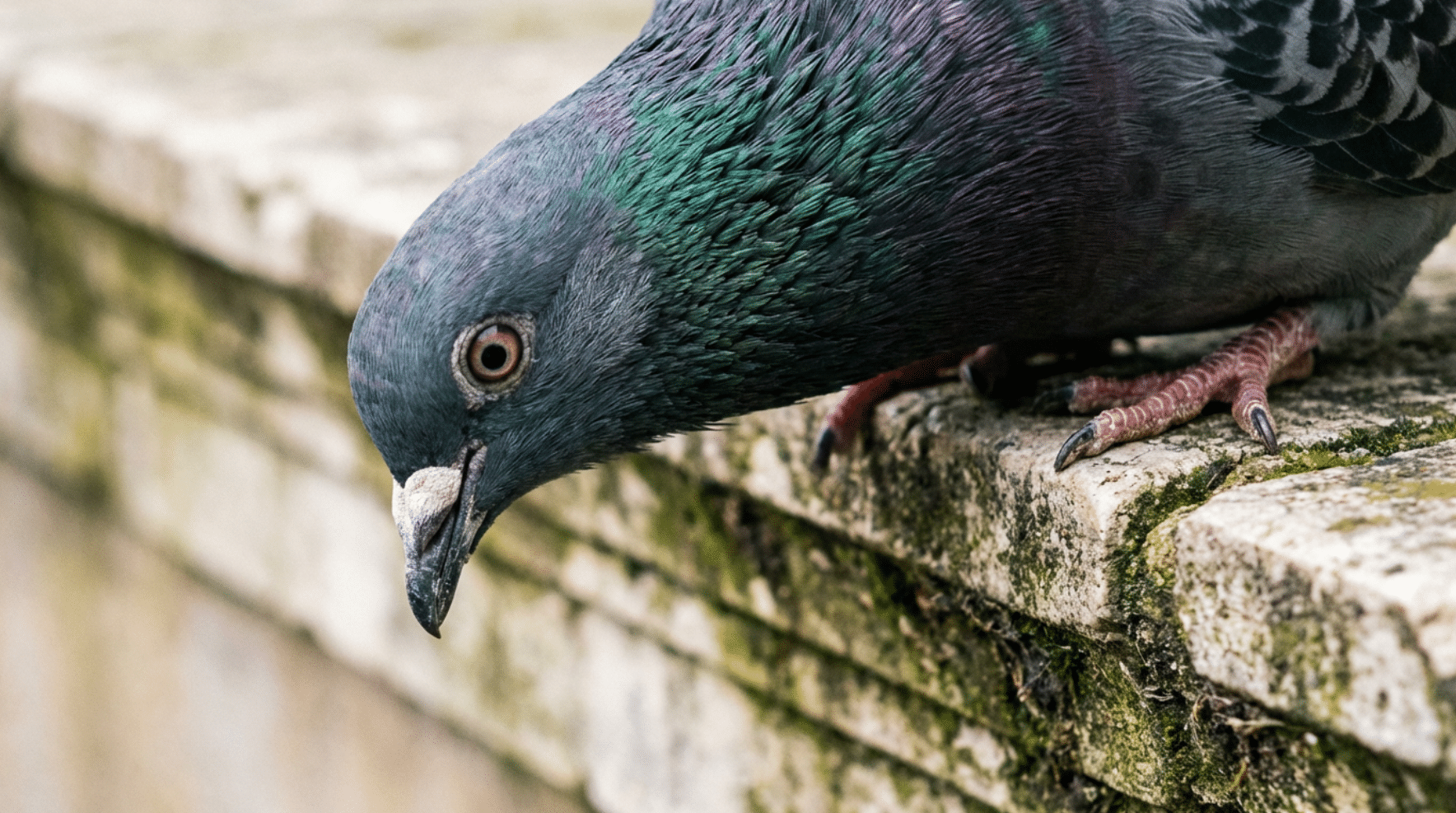
It ranges from simple physical deterrents like spikes and netting through to high-tech solutions like laser systems and trained birds of prey. The approach depends on the species you’re dealing with, the type of property, the scale of the problem, and what the law allows.
Here at Liverpool Pest Control Co., we want to educate everyone on bird control measures. So you can better understand how we humanely, legally, and effectively handle pest bird populations.
Why Bird Control Matters
Wild birds are a normal part of the urban environment, and most of the time they don’t cause any problems. In fact, we welcome them as part of a balanced ecosystem.
However, it isn’t always all plain sailing.
Bird control becomes necessary when certain species, particularly feral pigeons, herring gulls, starlings, and house sparrows, establish themselves on or in buildings in numbers that create health, safety, or structural issues.
Health Risks from Bird Populations
Feral pigeons alone are known to carry over 60 pathogens that can affect humans.
The most significant include:
- Chlamydia psittaci (which causes ornithosis, a respiratory illness sometimes called parrot fever)
- Cryptococcus neoformans (a fungal infection that can be fatal in vulnerable individuals)
- Salmonella
- E. coli
- Campylobacter
In 2019, two patients died in a Glasgow hospital from a cryptococcal infection linked to pigeon droppings on the building’s exterior. This proves just how important bird control measures are.
The droppings themselves are the primary transmission route.
When dry guano breaks down, it becomes airite and can be inhaled, which is how respiratory infections are contracted.
For anyone working in or around heavily fouled buildings, the exposure risk is real. It is also the reason why we always push for professional pest control to clean bird droppings.
Property Damage of Bird Activity
Bird droppings are acidic.
Over time, they corrode metal fixtures, stonework, brickwork, and painted surfaces. This can lead to thousands of pounds of damages to building complexes every year.
But it isn’t just the bird droppings that leave lasting damage.
Gutters and drainage systems blocked by nesting materials can lead to water ingress and damp problems.
Secondary Infestations
Where birds nest, parasites follow.
Bird mites, fleas, ticks, and textile beetles all thrive in nesting material. These infestations can work their way inside, especially if the bird has left the area.
Strict Laws on Bird Control: What You Can and Can’t Do
This is where bird control gets complicated. And why you should always rely on professionals to handle any bird problem.
All wild birds in the UK are protected under the Wildlife and Countryside Act 1981. That makes it a criminal offence to kill, injure, or take any wild bird, or to damage or destroy an active nest or eggs, unless you’re operating under a specific licence.
The penalties are significant, and the law applies regardless of how much of a nuisance the birds are causing.
Certain species, including feral pigeons, can be controlled under a general licence issued by the relevant statutory body. This allows lethal control in very specific circumstances, typically related to preventing disease or protecting public health and safety.
But even when this has been authorised, conditions must be followed completely.
For certain species like herring gulls and house sparrows, the situation is more restrictive.
This is because their populations are decreasing. So any control work, including egg and nest removal, typically requires a site-specific licence rather than a general one.
The licensing bodies assess applications on a case-by-case basis, and approval isn’t guaranteed.
As you can tell, the regulations for bird control are highly complex, and the legal risk is very real.
Never attempt to remove nests, destroy eggs, or harm birds yourself. Always trust a licensed pest controller to handle your bird control needs.
Extensive Bird Control Methods
Bird Netting
Netting is the most widely used bird exclusion method and arguably the most effective for protecting large areas.
Polyethylene or nylon nets are fitted across the face of a building, over a courtyard, beneath a roof canopy, or across any opening where birds are entering.
Different mesh sizes suit different species.
Smaller mesh sizes can exclude sparrows and starlings, while larger sizes excludes pigeons and gulls.
When installed properly by a professional, netting is virtually invisible from ground level, lasts for years, and provides complete exclusion.
The key word here is “properly.”
Badly installed netting that sags, develops gaps, or traps birds is worse than no netting at all. It can trap birds inside your area. Bird netting needs tensioning, securing at every edge, and regular inspection to ensure it stays intact, secure, and functional.
Bird Spikes
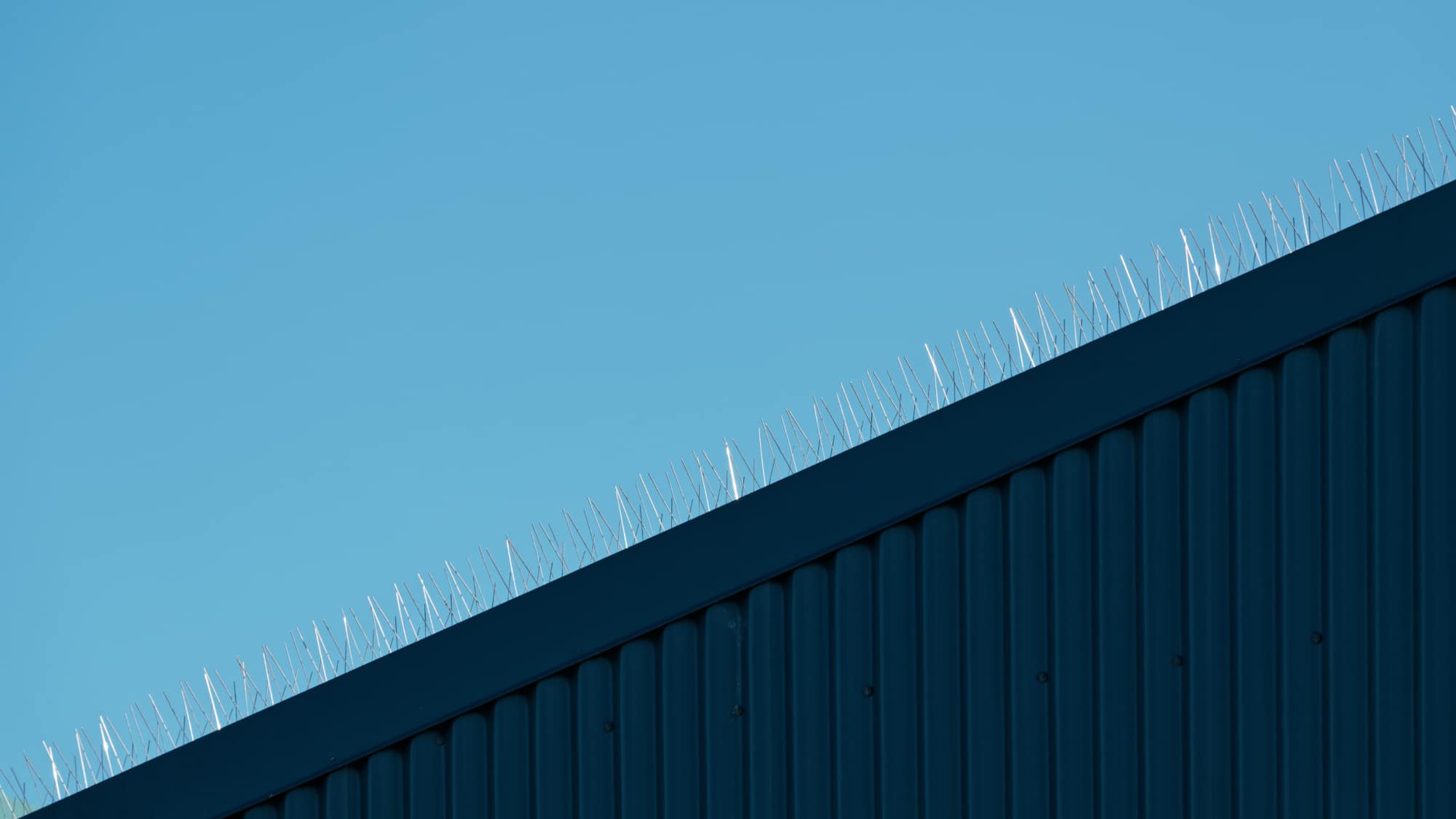
Spikes are rows of thin, upward-pointing stainless steel or polycarbonate pins fixed to ledges, sills, signs, and any flat surface where birds land and roost.
They might sound aggressive, but they’re actually a humane deterrent.
They make the surface uncomfortable to land on, so the birds move elsewhere.
They’re effective on pigeons and larger species, less so on smaller birds like starlings and sparrows that can perch between the pins.
Spikes are relatively cheap to install and virtually maintenance-free. The main limitation is that they only protect the specific surfaces they’re fitted to.
If a nearby area looks comfortable, a bird will land on that instead.
Bird Wire Systems
Wire systems use thin, spring-tensioned stainless steel wires stretched between small posts along ledges.
When a bird tries to land, the wire moves under its feet, creating an unstable surface that discourages roosting.
Wire systems are less visually intrusive than spikes and are often preferred on heritage buildings and listed structured as are nearly invisible from the ground-up.
Again, they’re effective on larger birds like pigeons and gulls, but less effective on smaller species.
Electric Bird Deterrents
Electric track systems work on the same principle as an electric fence.
A low-profile conductive strip is fixed to a ledge or surface, and when a bird lands on it, it receives a mild electric pulse that’s enough to startle but not enough to cause any injury.
Birds are smarter than you may realise, and they will learn to avoid landing in the area.
Optical Bird Gel
Bird gel is a relatively recent development. It’s a non-toxic substance applied to ledges and surfaces in small dishes.
To the human eye, it looks like clear jelly. But to birds, which see in the ultraviolet spectrum, it appears to glow like fire.
It’s discreet, humane, and effective for light infestations. However, it isn’t the best choice for heavily fouled sites where birds are deeply established.
Falconry
Using trained birds of prey to deter pest birds is one of the oldest forms of bird control and still one of the most effective for large open sites.
A skilled falconer flies a hawk or falcon over the area at regular intervals, and the presence of an active predator drives pest birds away from the territory.
It’s still widely used at airports, distribution centres, landfill sites, and large commercial estates where physical deterrents alone can’t cover the area.
Just a heads up, falconry needs regular, scheduled visits to maintain the deterrent effect. But for sites with persistent gull or pigeon problems across open spaces, it’s hard to beat.
Bio-Acoustic and Laser Systems
Bio-acoustic systems play digitised distress calls and predator calls through speakers, mimicking the sounds that cause pest birds to flee.
They’re most effective in agricultural settings and large industrial sites where the noise won’t disturb people.
Laser deterrents project a green laser beam that birds perceive as a physical threat, causing them to take flight.
Both technologies work best as part of a broader programme rather than standalone solutions, and they’re more effective in rural areas where birds haven’t habituated to constant stimulation.
Three Approaches of Bird Control
When it comes to bird control, there are three types of approaches.
Proofing
This means physically excluding birds from an area so they can’t access it at all.
Netting and mesh fall into this category.
It’s the most reliable approach because it removes the area entirely from bird access, but it’s typically more expensive upfront and requires professional installation.
Deterrence
Deterrence means making an area unattractive or uncomfortable so birds choose to go elsewhere.
Spikes, wire, gel, electric strips, and acoustic systems are all examples of deterrents.
They reduce bird pressure but don’t guarantee complete exclusion, because a determined bird with a strong motivation (an established nest, a reliable food source) may tolerate the deterrent.
Removal
This is physically removing birds, nests, or eggs from a site.
This is the most legally sensitive area and almost always requires a licence.
It’s typically used alongside proofing and deterrence rather than as a standalone measure, because removing birds without addressing what attracted them in the first place just creates a new space for another bird to move into.
Contact Liverpool Pest Control Co. for Effective Bird Control
If your home or business is experiencing problems with bird activity in Liverpool, Liverpool Pest Control Co. is here for you. We cover the whole of Liverpool and Merseyside with humane, legal, and effective bird control services.
Whether you need domestic or commercial pest control, our highly trained team is here to help. We’re BPCA-accredited, fully licensed for all bird work, and we’ll always explain exactly what’s needed and why before any work begins.
If you’ve got a bird problem on your property and you’re not sure where to start, call us on 0151 459 5444. We’ll carry out a free survey and give you an honest recommendation.