
Most people think of pigeon droppings as a nuisance. An eyesore.
A single dropping from a passing pigeon, is not a serious concern.
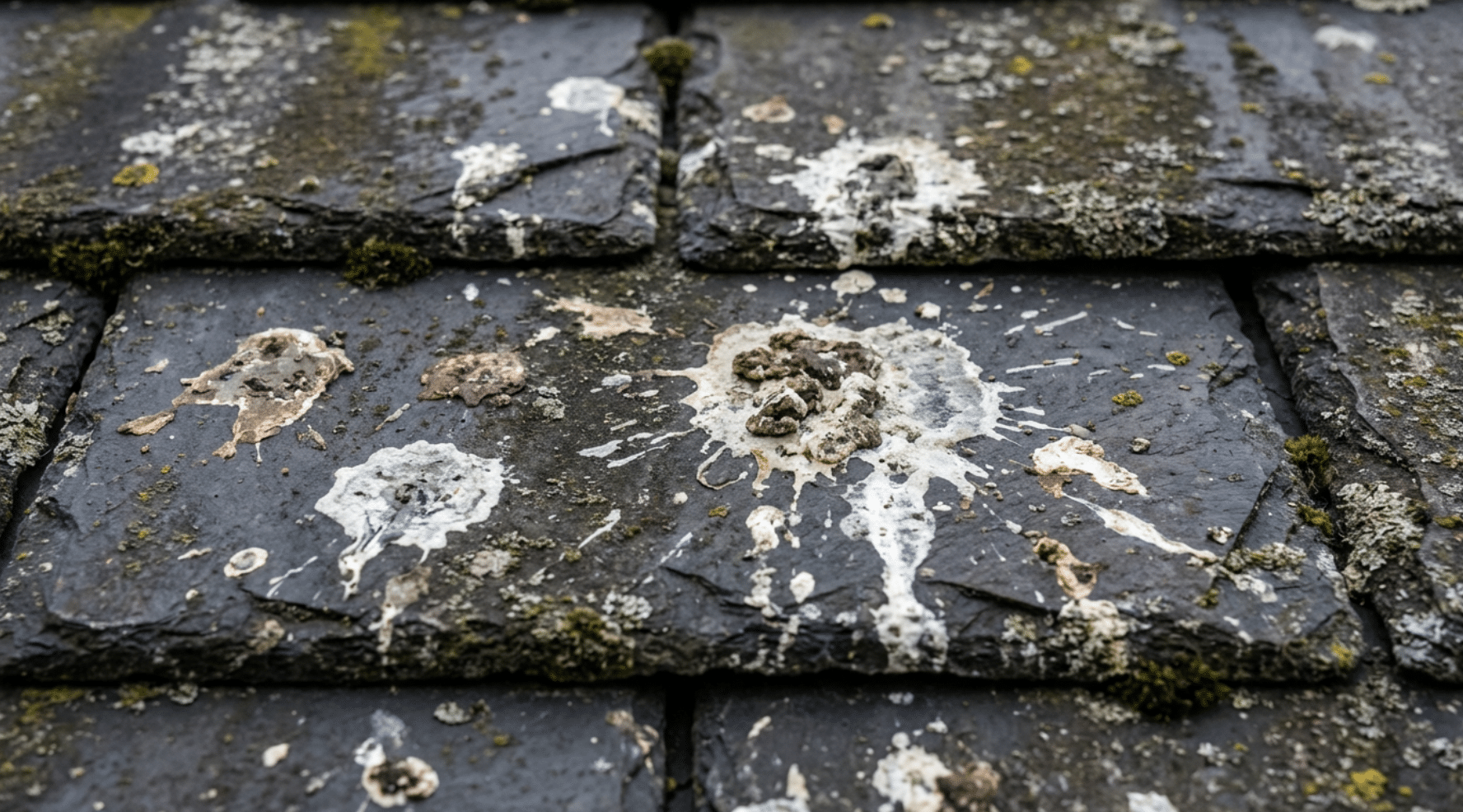
But when pigeon guano accumulates on a building over weeks, months, or years, it becomes something very different.
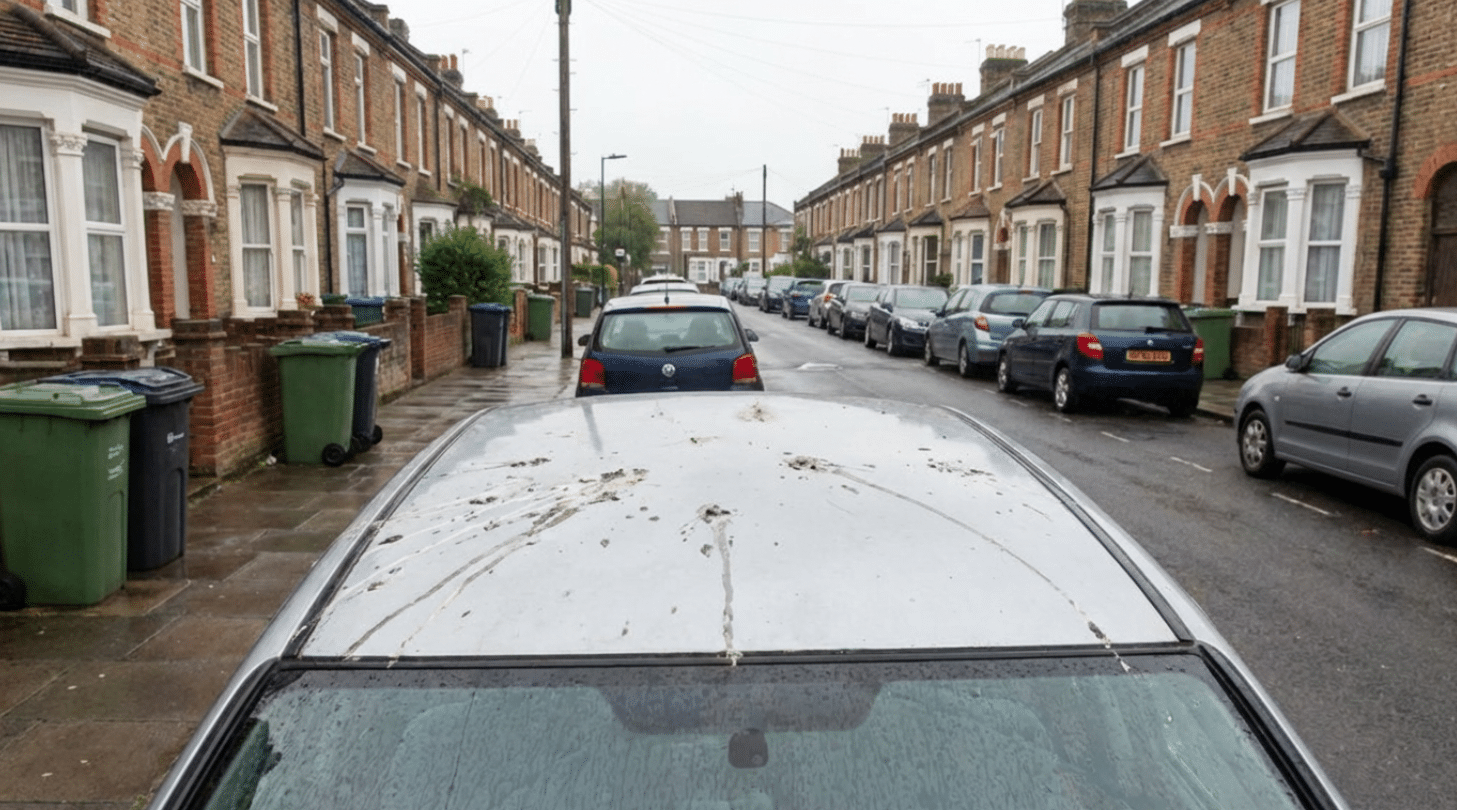
It becomes a genuine health hazard, a source of structural damage, and in some circumstances, a substance regulated under health and safety law.
We deal with pigeon infestations across Liverpool and the wider UK, and guano removal is a regular part of that work. Learn why you should take pigeon droppings seriously.
What Is Pigeon Guano? – By Liverpool Bird Control Professionals
Guano is the accumulated droppings of birds or bats.
One of the biggest problems of guano in the UK, comes from pigeon populations. This is because pigeons are the species most likely to roost and nest on buildings in large enough numbers for their waste to build up.
A single feral pigeon produces around 12 kilograms of droppings per year. Multiply that by a flock of 50 birds roosting on the same building, and within a few months you’re looking at a lot of waste.
Fresh pigeon droppings are semi-liquid and relatively easy to clean.
But when these dropping dry out they become powdery. When disturbed, whether by foot traffic, wind, cleaning, or building work, they become airborne.
This is what makes pigeon droppings such a huge risk, as they can easily be inhaled without realising.
Disease Problems from Pigeon Guano
Feral pigeons carry over 60 known pathogens, and their droppings are the primary route through which those pathogens reach humans.
The diseases most commonly associated with pigeon guano in the UK are histoplasmosis, cryptococcosis, and psittacosis.
Others, including salmonella, E. coli, campylobacter, and listeria, are also present but are more typically associated with surface contamination than with airborne exposure.
Repeated exposure to airborne proteins in pigeon droppings and feather dust can trigger an immune response known as extrinsic allergic alveolitis, commonly called bird fancier’s lung.
For commercial properties, heavy accumulations of guano present hygiene, safety, and regulatory concerns and should be managed appropriately through professional pest control measures.
Property Damage from Guano
The health risks get a lot of attention, but guano also causes real structural harm to buildings.
Pigeon droppings contain uric acid, which is corrosive enough to etch into limestone, sandstone, concrete, painted metal, and even stainless steel given enough time and accumulation.
Heritage buildings and older stone structures are particularly vulnerable, because the acid attacks the surface and allows moisture to penetrate, accelerating weathering and decay.
The cost of stone restoration on a guano-damaged building can be enormous, and the longer the fouling is left, the deeper the damage goes.
Guano can also block gutters, downpipes, and flat roof drainage outlets, leading to water pooling, overflows, and damp ingress.
COSHH and Legal Obligations
In a workplace context, pigeon guano is classified as a biological hazard under the Control of Substances Hazardous to Health (COSHH) Regulations 2002.
That means employers have a legal duty to assess the risk, implement control measures, and protect workers from exposure.
If building work, maintenance, or cleaning will disturb accumulated guano, a COSHH assessment must be carried out before the work begins, and appropriate control measures, including PPE, containment, and safe disposal, must be in place.
The HSE publishes specific guidance on psittacosis and other diseases associated with bird droppings in construction environments. The guidance applies to any work that’s likely to disturb dried droppings, including demolition, refurbishment, roof work, and even routine maintenance on buildings with established pigeon colonies.
Failure to comply with COSHH obligations can result in enforcement action, improvement notices, and prosecution.
How to Clean Pigeon Guano Safely
For light fouling on a domestic property, a windowsill, a balcony railing, a small patch on a wall, you can clean it yourself safely with important precautions.
Wear disposable gloves and a dust mask, wet the droppings thoroughly before disturbing them (this is the single most important step, because wetting prevents the dust from becoming airborne), scrape or brush the softened guano into a bag, disinfect the area with a dilute bleach solution or a proprietary biocide, and always wash your hands thoroughly afterwards.
Double-bag the waste and put it straight in your general household bin.
The critical point is wetting.
Never sweep, scrape, or pressure wash dried pigeon guano without soaking it first.
Dry sweeping throws spores directly into the air you’re breathing. Pressure washing does the same thing but faster and over a wider area, creating an aerosol of contaminated water droplets that can travel considerable distances.
Both are dangerous, and both are the most common mistakes people make.
When You Need a Professional
If the guano accumulation is heavy, if it’s in an enclosed or poorly ventilated space like a loft, plant room, or warehouse, or if it’s on a commercial property where COSHH obligations apply, professional removal is always the right call.
It’s not a job for a general cleaner or a window cleaning company with a pressure washer.
Always use a reputable pest control company that can handle the job safely and compliantly.
The equipment, training, and risk assessment requirements are specific to biohazard work, and getting it wrong puts the operatives and anyone nearby at risk.
Contact Liverpool Pest Control Co. Today for Professional Bird Control Measures
Cleaning guano without addressing the birds that produced it is a temporary measure at best. Within weeks, the same flock will have re-fouled the same surfaces, and you’ll be back where you started.
Liverpool Pest Control Co. is here to handle both the guano management and the bird control. Whether it is from pigeons, gulls, or any other bird species, we are here for you.
We’re BPCA-accredited, fully equipped for biohazard cleaning, and experienced with everything from domestic balconies to large commercial roof installations.
For expert bird control, speak to an experienced member of our team today on 0151 459 5444 to receive your FREE QUOTE or survey,