
Birds nesting in roofs is one of the most common wildlife issues we deal with across the UK, and it’s also one of the most legally complicated.
Unlike mice or rats, wild birds and their nests are protected by law, which means you can’t simply remove them whenever you like.
Get it wrong, and you could face prosecution, a fine, or even imprisonment.
That doesn’t mean you have to live with the noise, the droppings, and the damage until the birds decide to leave on their own. But it does mean you need to understand what you’re dealing with, what the law allows, and when to act.
Which birds nest in roofs? – Advice from Liverpool bird controllers
Several species have adapted to nesting in and around buildings, and each one behaves slightly differently.
Knowing which bird you’re dealing with helps determine the best course of action, because some species have additional legal protections on top of the standard ones.
House sparrows
House sparrows are one of the most frequent roof nesters in the UK.
Small and crafty, they can squeeze through gaps as small as 25mm to access roof spaces, eaves, and soffits.
Safe and sheltered, they will build untidy nests from straw, feathers, and whatever else they can find.
Sparrows are colonial nesters, so if one pair moves in, others tend to follow.
They can raise two or three broods per season between April and August, which means the noise and mess build up over several months.
Starlings
Starlings favour cavities in roof tiles, under eaves, and inside loft spaces.
They’re loud, particularly when feeding chicks, and their nests can block ventilation points and gutters.
A single pair produces five to seven eggs per clutch, and the chicks are noisy feeders.
Starling numbers have declined significantly in the UK over the past few decades, which makes them a species of conservation concern.
Swifts
Swifts arrive in the UK around May and leave by August.
They nest in holes and crevices in older buildings, often under roof tiles or in gaps between the roof and the wall.
House martins and swallows
House martins build distinctive mud cup nests under eaves and overhangs, while swallows prefer sheltered spots inside buildings like garages and outbuildings.
Both species migrate to the UK for summer and typically nest between April and September.
Their nests are protected while in use, and house martins often return to the same nesting site year after year, rebuilding or reusing old nests. This makes bird proofing important outside of nesting season.
Feral pigeons
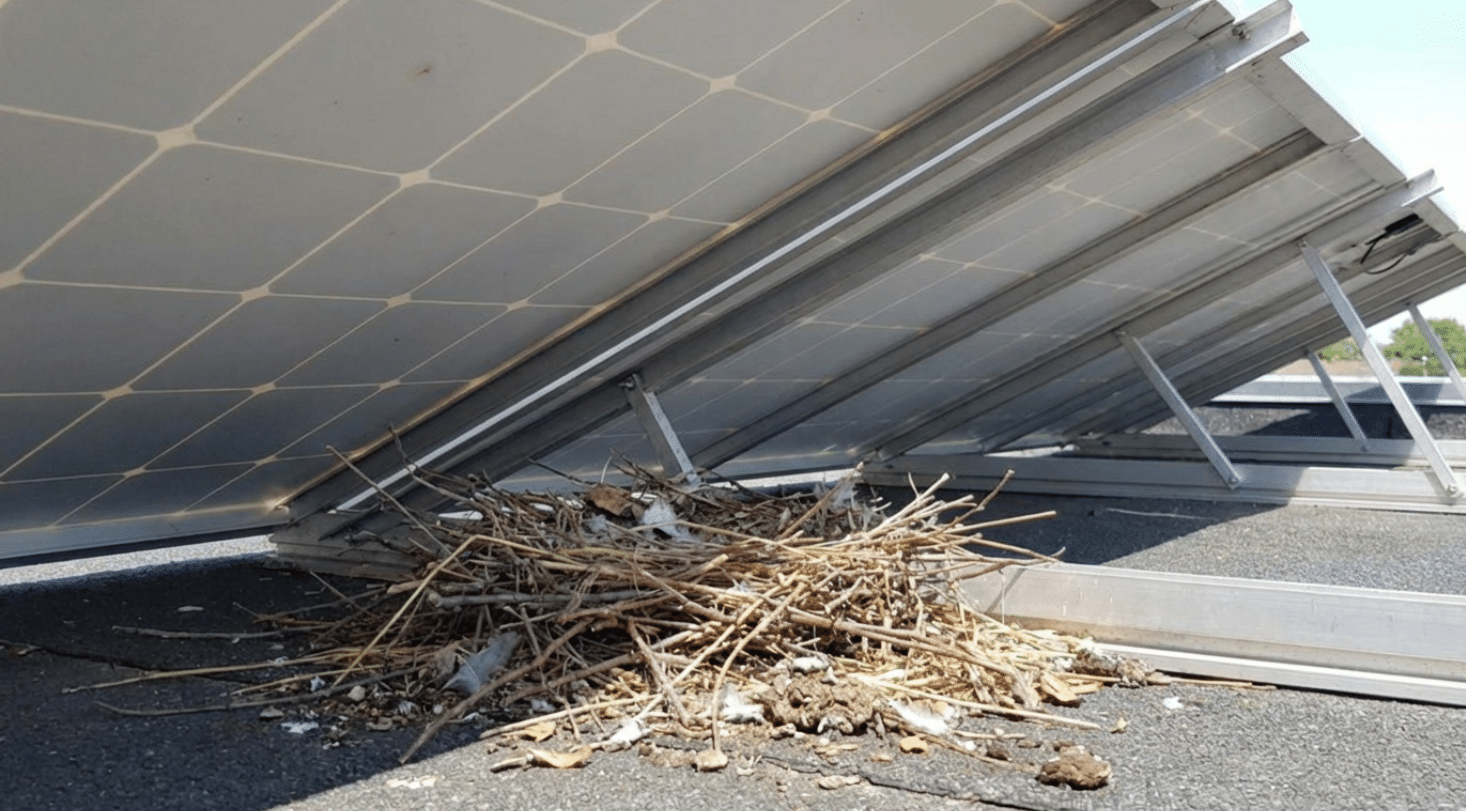
Pigeons nest on flat surfaces in sheltered locations, including roof voids, ledges, and under solar panels.
Unlike the species above, pigeons can breed throughout the year and produce multiple clutches. Their droppings accumulate quickly and carry a range of diseases including psittacosis, cryptococcosis, and salmonella.
Pigeons are still protected under the Wildlife and Countryside Act, but they can be managed under general licence in certain circumstances, which gives pest controllers more flexibility than with other bird species.
Signs of birds nesting in your roof
You might not see the birds entering and leaving, especially if the access point is on the back of the property or high up under the ridge tiles. But there are plenty of signs that give it away.
Bird activity noises
Scratching, scrabbling, or tapping sounds from the ceiling or walls are the most obvious indicator, particularly in the early morning or late evening.
Chirping or cheeping from chicks gets louder as they grow, and by the time they’re close to fledging, the noise can be hard to ignore.
Increase of droppings
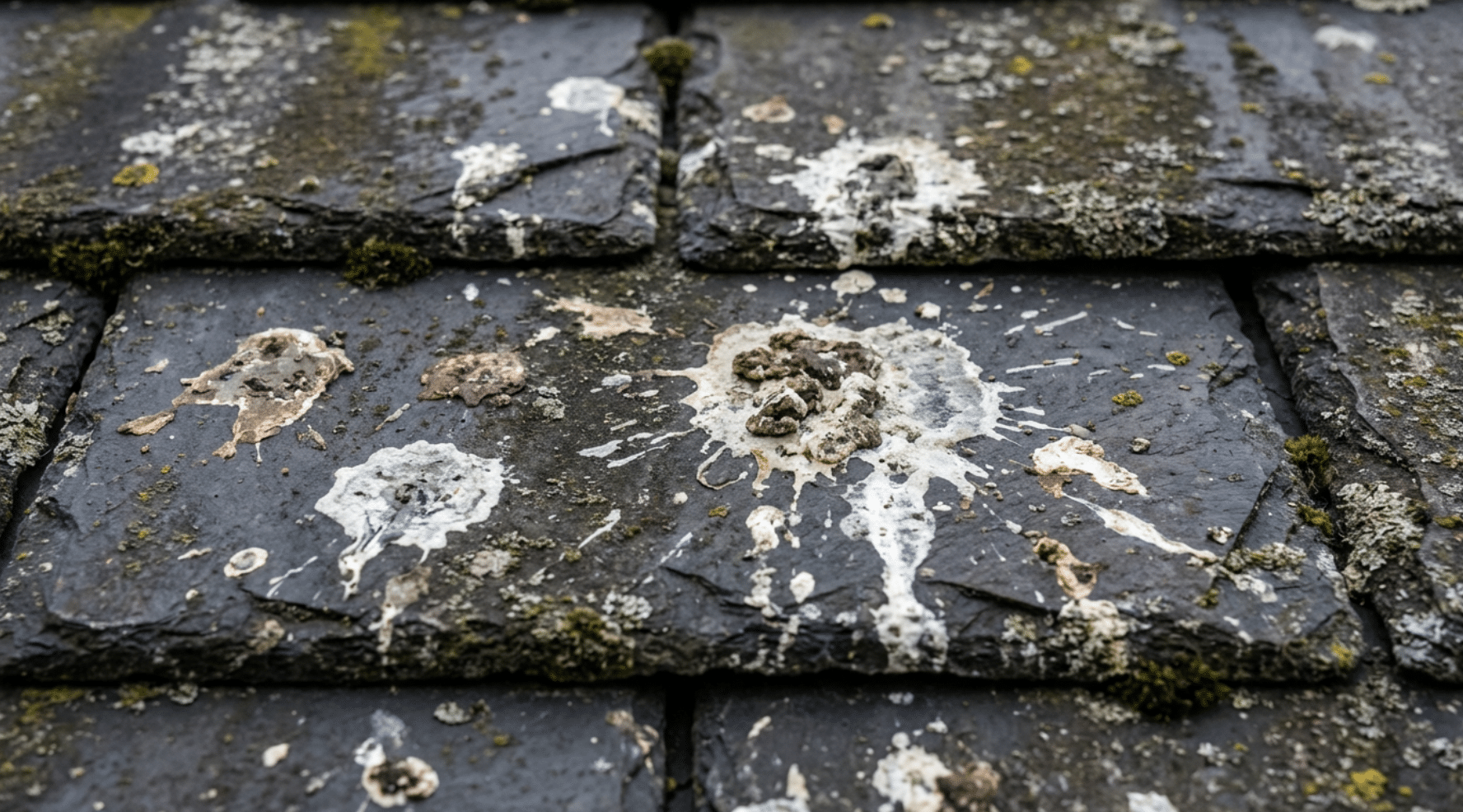
Outside, look for droppings on walls and windowsills below the roofline.
Birds tend to defecate near where they nest, so an increase of droppings indicates they have made a nest on your property.
Signs of nesting materials
Feathers, branches, and twigs poking out from under tiles, along gutters, or in your loft are all telltale signs of bird nests.
Small insects in your home
Bird nests are sites of other parasites and insects.
These insects may migrate into your home when the chicks have fledges causing itchy bites that are often mistaken for bed bug bites or a skin allergy.
Blue bottle flies are attracted to dead birds, which can happen in the nest if a chick has passed away.
The law on birds nesting in roofs
Under the Wildlife and Countryside Act 1981, all wild birds in the UK are protected. It is a criminal offence to:
- Intentionally kill, injure, or take any wild bird
- Take, damage, or destroy the nest of any wild bird while it is in use or being built
- Take or destroy wild bird eggs
- Deliberately block access to an active nest
The penalties are serious. Convictions can result in an unlimited fine, up to six months in prison, or both.
Always consult with a professional pest control expert for bird control solutions.
How to stop birds nesting in your roof
Prevention is key to successful bird control. At Liverpool Pest Control Co., these are some of the services we offer to our valued customers.
Seal entry points
This is the single most effective step.
Birds can’t nest in your roof if they can’t get in. We can help identify and seal gaps under ridge tiles, replace missing or damaged tiles, fit mesh over ventilation openings (while maintaining airflow), cap chimneys, and repair holes in soffits and fascia boards.
For older properties with multiple small openings, a full roof survey is worth the investment, because missing even one gap means the birds will find their way back in.
Install bird proofing
Where sealing isn’t practical, physical deterrents can prevent birds from landing and nesting.
Options include bird netting over larger openings and recessed areas, spike systems along ledges and parapets, bird wire on flat surfaces, and eave protectors that block access to the gap between the roof and the wall.
Professional installation matters here. Poorly fitted netting can trap birds rather than deter them, which creates a welfare issues.
Maintain your roof
Annual roof inspections catch small problems before birds exploit them.
A slipped tile or a crumbling piece of mortar might seem minor, but to a house sparrow looking for a nesting cavity, it’s an open invitation.
Keeping gutters clear of debris also removes material that some species use for nest building.
When to call a professional bird control expert
If you’re dealing with a large pigeon colony, birds nesting in hard-to-reach areas, or a recurring problem that keeps coming back despite your efforts, professional bird control is the most reliable solution.
Our highly trained technicians can carry out a full site survey, identify the species involved, recommend the most effective proofing measures, and install deterrent systems that comply with wildlife legislation.
We also provide safe removal and cleaning of accumulated guano, which should always be handled with proper respiratory protection.
No matter the species from seagulls to starlings, we are here for you.
Call us today on office@liverpoolpestcontrolco.co.uk for a free survey, or fill in our online enquiry form.